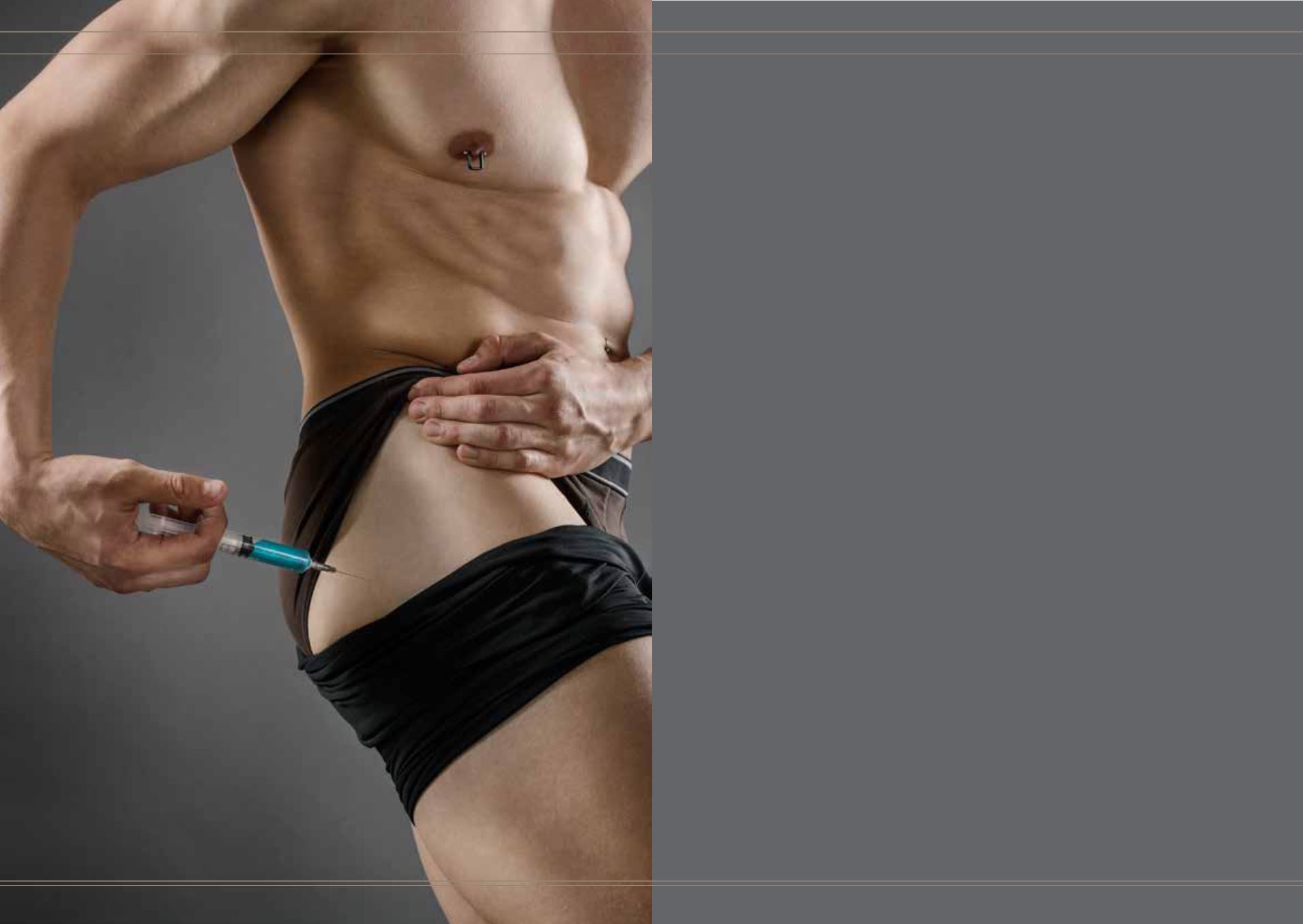
Pitting the 'T' in trans
Testosterone (more commonly known as
‘T’) certainly has a lot going for it. Delivered
in either a cream, tablets or, most often,
an injection, the effects of an increase in
testosterone pretty much always brings about
masculinising effects which are welcomed
with open arms. A lower voice, facial hair,
a shift in body shape and skin changes are
all effects of hormone therapy. It seems a no
brainer.
But there are other considerations. For a
start, many of the effects from T are a one-
way trip. It is possible to stop taking T at
any point, providing you still have ovaries
to produce estrogen in its place. Your voice
will always stay as low as it has reached
on T and changes in body hair will also
continue. However, body fat composition
will revert back to a more female pattern and
menstruation will start again.
The good news is that you can always take T
in steps. It is possible to take enough to see
a few subtle changes and then take a break
before starting again. Taking a very low dose
can also slow down the rate of modification,
giving you time to adjust to your changing
body as you go along.
However, there are some side-effects to T.
For a start, there are many men who get
spots from the increase in oils and others
notice changes in their mood such as a
raised libido and more anger. But there are
also some physical complications such as an
increase in cholesterol, red blood cells and
blood pressure which must be monitored
for. The testosterone can also put a strain
on your liver if it is not controlled and
monitored properly. Most of the serious
side-effects can be monitored and controlled
for by medical staff and it is not often that T
causes serious issues.
Natural Transitioning
There are many reasons why you personally
might not want to take T. If you are not
planning to be out to everybody or you are
not sure about transitioning long term, then
there are also other things you can do in
your day to day life to feel more comfortable
with your identity. Often called ‘natural
transitioning’, there are now a lot of people,
both trans and non-binary, who adopt
techniques to mimic some of the effects of T.
A good deal of the work happens in the gym
where workouts are based around building
shoulder and arm muscle and burning fat to
adopt a more masculine looking form. Vocal
coaching can also help with voice issues and
it is possible to lower your tone of voice over
time, although the effect will lack the deep
resonance that T can create.
Lack of facial hair will continue to be an
issue and menstruation will also continue.
Top surgery is a tricky issue with the NHS
normally only offering funding to those who
have been on T and are aiming for a full
transition. However, there are private clinics
who may consider surgery without the use of
T, but these come at a price.
Binding is a cheap and safe alternative to
sop surgery and if you are already fairly small
on top, it can be incredibly effective and
comfortable, although it might take a while
to find the right binder for you.
If you want any more information about T
then check out the NHS Choices website
and click the ‘treatment’ tab -
Conditions/Gender-dysphoria
To 'T' or not to 'T'
Hormone therapy used to be considered the
be all and end all of transitioning. With
gender still very much a binary concept,
many trans men felt taking a testosterone
shot every month was the only sure-fire
way to be accepted as a man. However,
times have changed and there is also now
a growing counter movement who feel you
can transition enough to pass using natural
methods. So which is the right route for you?
WINTER 2015
56
57


