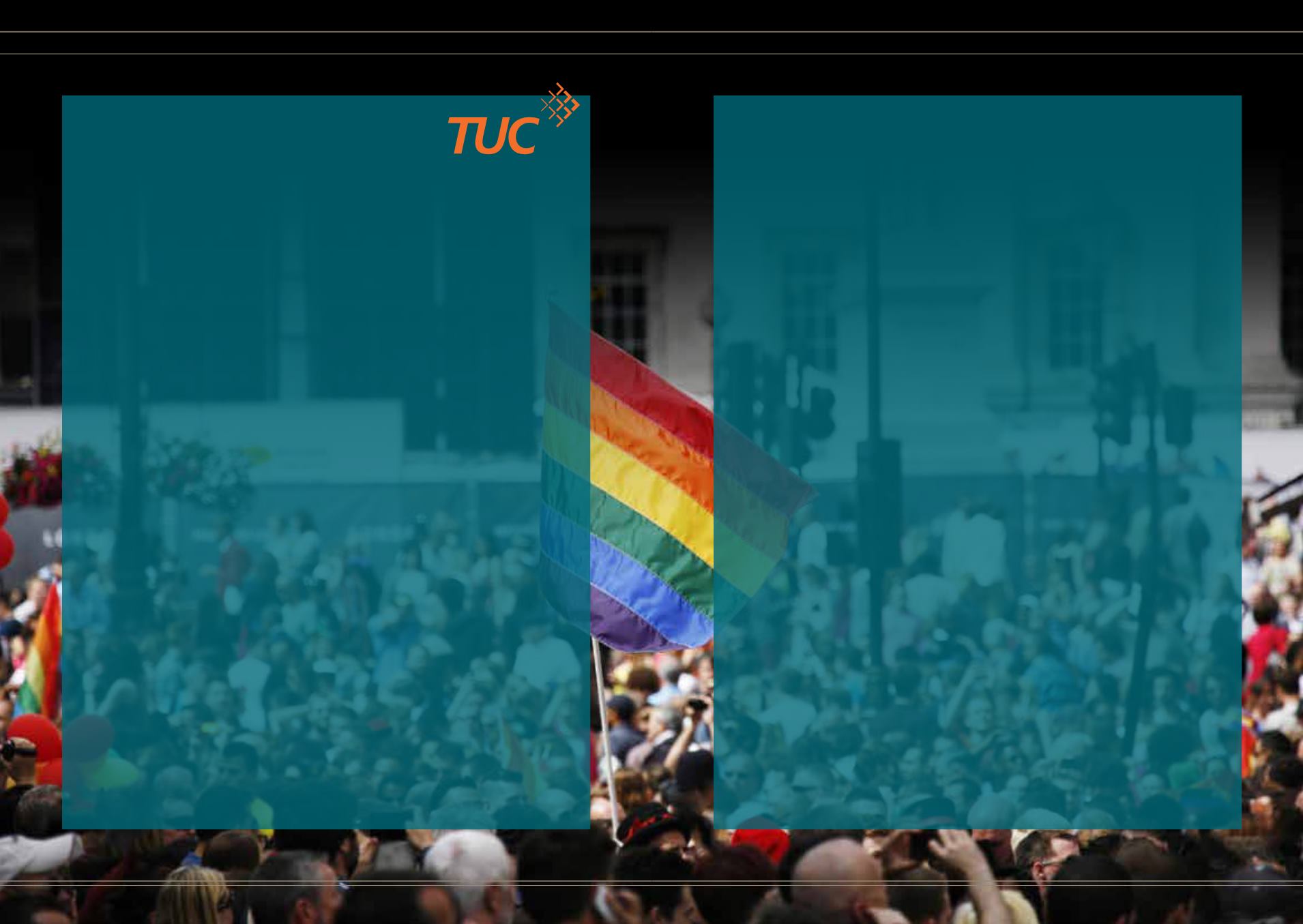
Pride: party or protest?
“Two figures to compare and contrast:
One, 40,000 people on the Pride parade
in London with scores of thousands more
watching from the pavement, cheering
and waving. Two, 5,597 hate crimes
reported against LGB people and 605
against trans people in the year 2014/15.
The Crime Survey for England and Wales
suggests these may represent just a quarter
of the crimes actually committed against
members of our communities.
This is an increase from the previous year
of 22 per cent (LGB) and nine per cent
(Trans). The survey suggests that at least
some of the increase results from improved
reporting, but however you look at it, it is
still a lot of hate. The reported figure for
crimes against LGB people is the second
highest in the list after race hate.
In short, the figures reveal that although
there has been a dramatic and positive
change in popular attitudes towards us, it
has not reached everyone. Those prepared
to publicly abuse (or physically attack)
someone known or thought to be LGB or
T are at the extreme end of a spectrum
of views that includes many more people
who now think they shouldn’t say what
they really think. However, they were
among those who were found to lead the
prejudice-based bullying and harassment
that is still common in far too many
workplaces, while denying they are being
homophobic.
That’s why the long fight to win our
liberation is not over and that’s why we
take part in Pride events and argue that
Prides still need to have a campaigning or
political agenda.
At the same time, progress towards
equality in many countries is matched
by vicious state-inspired legal and social
oppression in others. For the same reason
it was right that the flags of the 77
countries that still criminalise us led Pride
London this year.
The other people who should have been at
the front, Lesbians and Gays Support the
Miners (LGSM), however, were not there.
The organisation, which is celebrating
the 30th anniversary of their magnificent
campaign, promoting solidarity between
our communities and the trade union
movement, remained true to the tradition
of that solidarity and chose to stay with
the trade unions who found themselves
shunted away from the front of the parade.
The front of the parade was instead
dominated by Barclays Bank and
Citigroup. The people who have worked
so hard and so long to achieve a better life
for all LGBT people had their place taken
by large companies. Where was Barclays
Bank when we were fighting section 28,
campaigning for an equal age of consent
and rights for lesbian mothers, pressing
for the outlawing of discrimination? But
the small change from their CEO’s salary
had bought them a brilliant marketing
opportunity and they were delighted to
seize the chance.
The board of Pride has a tricky balancing
act to achieve. To keep Pride free and to
make it accessible (not just physically) to
everyone is very expensive. The Mayor
of London contributes, but not enough.
So sponsorship is vital. The alternative
is unacceptable: too many Prides already
exclude poorer members of our community
by charging for admission.
It is not a simple argument. A Pride in
London survey found that most people
were happy with the event and that three
quarters welcomed the presence of the
large companies. Only just over one tenth
saw Pride as making a political statement.
But the very presence of thousands of
LGBT people and their supporters on the
streets is political: a statement that our
community has nothing to hide and is a
full part of our diverse society. It also has
to be representative of the diversity within
our community, which is why getting
trans and disabled people to feel welcome
is vital and why the development of UK
Black Pride is so important.
This, too, is political: and it’s one reason
why it is not acceptable to permit racist
organisations (including their LGB or T
members) to march with us.
Our community has a short memory.
Younger generations view our struggle
for equality as ancient history. But this is
wrong because it is not history, it remains
a continuing struggle against prejudice
and discrimination as proven by the
hate crime stats and the surveys showing
harassment at work and disproportionate
problems of homelessness, mental ill
health and suicide risk.
It is dangerous too, because (as Santayana
famously said), “those who forget their
history are doomed to repeat it”. We
live in a febrile political environment in
which reactionary and far right views (e.g.
racism) have become more powerful in
Britain and across Europe. Don’t think
that LGBT people will be immune to
this trend. That’s why the trade unions
do not apologise for arguing that Pride
festivals – the only place our otherwise
invisible communities do come together
on the streets – must not abandon a
political agenda or bury it underneath the
advertising hoarding of big business.
We are pleased that banks and businesses
have belatedly decided to support our
community and encourage their LGBT
employees to take part. But it was the
alliance between organisations of working
people (the trade unions) and LGBT
activists that was largely responsible for
our achievements and you can be sure
it won’t be the banks that complete the
equality agenda or drive the fight for
equal rights in countries where they do
not exist. So welcome their presence, but
remember why we are there.
The visibility of LGBT communities on
the streets will be a political statement
for as long as others choose to oppress
or discriminate against us. Will Pride
organisers around Britain recognise this
and use the opportunity to promote
a challenge to inequality or will they
surrender to the commercial priorities of
the companies willing to invest in them?”
Peter Purton, LGBT officer at the Trade
Union Congress,
.
WINTER 2015
40
41


