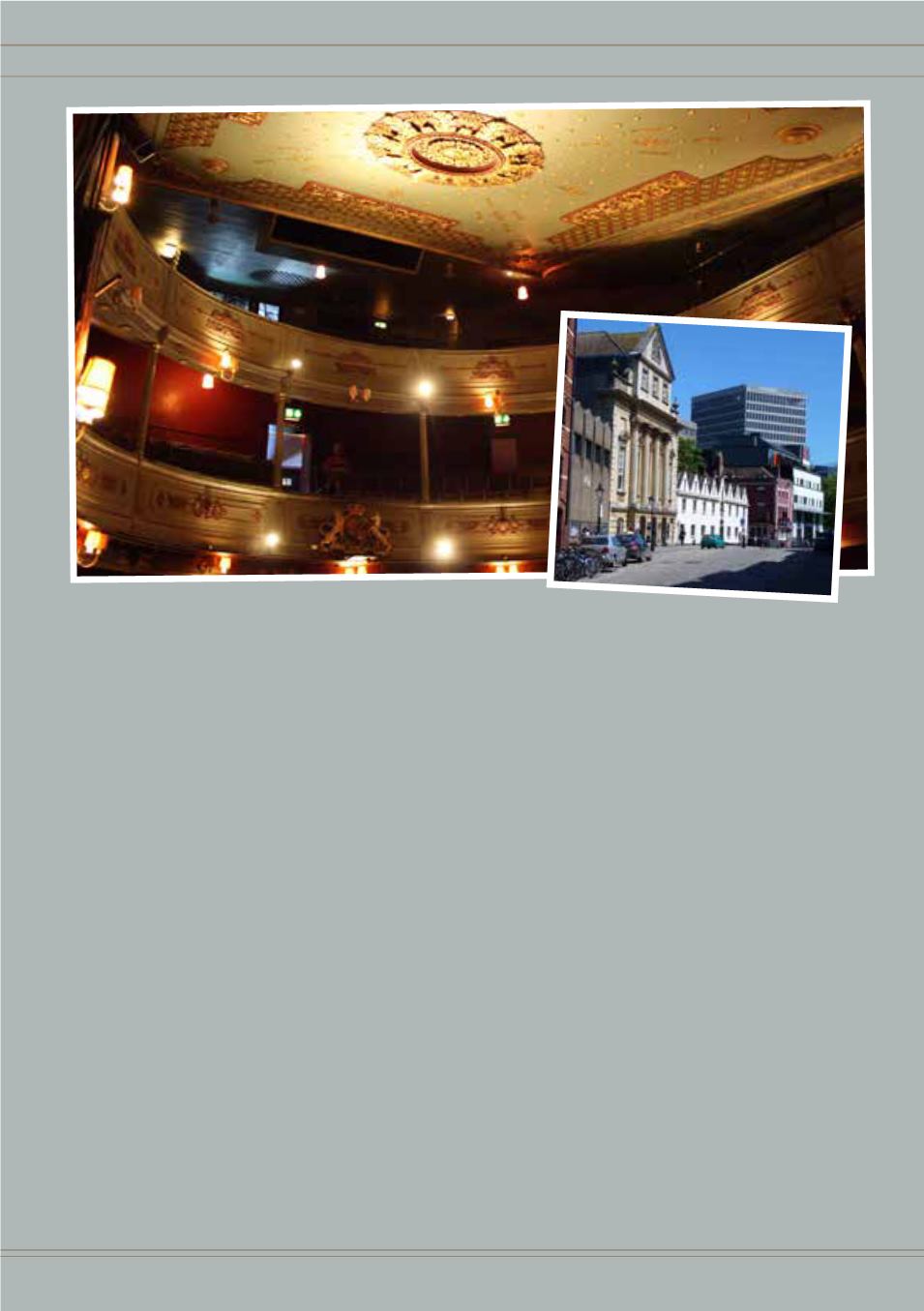
after he died, his widow Sarah took over and
turned around the fortunes of the theatre. Her
work laid the bedrock for the future of the
theatre and in the ten years she was in charge,
she made it a thriving enterprise and worked
seven days a week.
But by the mid-1940s, things had changed
greatly and the theatre’s future was in doubt
when it was put up for sale in 1942. The public
were keen to see the building kept as a theatre
and so a trust was created to buy it. The theatre
was saved and a few years later, things got
even better for the theatre when The Old Vic
in London were looking for an ‘outpost’ and
settled on the Bristol Theatre Royal. Staff were
sent over from the London theatre and the
Bristol Royal changed to its current name, the
Bristol Old Vic.
The theatre’s fortunes were up and down
over the intervening years and arguably the
highpoint of the theatre’s history came in 1954
when the first ever performance of Salad Days
took place at the Old Vic. The show travelled
to the West End and Broadway and ran for
2,283 performances. The Bristol Old Vic
was also the venue for the premier of Arthur
Miller’s The Crucible which fictionalised the
Salem trials.
The fortunes of the theatre were up and down
for many years and in 2007, a controversial
decision was made to close and refurbish the
Old Vic. The theatre had suffered heavy losses
in the 80s and many of the theatre’s fans were
concerned it would not open again. However,
it did reopen and has seen progressive
refurbishments, the most recent being work on
the lobby and front of house area.
The fortunes of the Bristol Old Vic track not
only its personal history, but also that of the
theatre industry. From riding high to the brink
of disaster and then back to the good times, the
life of theatres nationwide are filled with good
and bad times. But of all theatres, the Bristol
Old Vic has outlived them all and proved that
a devoted following can make the difference
between the life and death of a theatre.
71


